
Scraping popcorn texture off a ceiling takes about a day, maybe a bit more. Repairing the drywall underneath takes longer, and that stage decides whether the finished ceiling reads flat or patched. Brush & Color Painting has been a top-rated painting company in Austin, TX, since 2017, operating out of a shop in Cedar Park.
We keep the drywall side in-house rather than handing it to a sub. Nick Painter writes every estimate himself and stays on the job through the final walkthrough. Our 9-year interior warranty covers workmanship on walls, ceilings, trim, doors, and built-ins. Before you sign a quote for this work, just ask what the contractor expects to find above the texture.
How the Removal Runs from Prep to Scrape
Prep swallows half a day and earns it back twice over. Furniture leaves the room where it can, and whatever stays gets wrapped and pushed to the middle. We run plastic across floors, up the walls, and over any fixture that has to stay. The edges get taped so debris has nowhere to travel.
Fans and light fixtures come down, and the circuits go off, because water and open junction boxes do not belong in the same room. The scraping moves quickly once the texture is wet. Warm water goes on through a pump sprayer in small sections, then sits until the material softens. That soak keeps the texture from breaking up into airborne dust.
A wide blade held at a shallow angle lifts it off in sheets. We start at the perimeter and keep the blade running parallel to the walls. A blade driven into the wall joint tears the drywall tape, which turns one repair into two. The masking and protection follow the same sequence we use for eco-friendly interior painting, just with more plastic.
Test the Texture Before Anyone Scrapes It
Popcorn texture manufactured before the mid-1980s can contain asbestos, and texture sitting intact on a ceiling releases nothing into the room. Scraping is the action that changes that, which puts testing at the front of the project.
We arrange lab testing when a ceiling needs it, and the report is worth keeping with the house records. The age of the house narrows the odds without settling them.
Ceilings go through drywall repairs after plumbing work and get resprayed during remodels. A 1974 house can carry 1990s texture in one bedroom and original material down the hall, which is kind of wild.
A positive result moves the job to a licensed abatement contractor and out of a painting crew’s hands. Any contractor willing to scrape an untested pre-1980s ceiling is telling you something about how they work.
Why Painted Texture Takes Longer to Remove
Painting over texture blocks the water that has to soften it. The film sheds moisture instead of absorbing it, and each coat added over the decades makes the next one harder to get through. A ceiling painted once gives ground with patience, while one painted three times can resist water almost completely.
Those ceilings need scoring to break the seal, longer soak times, and firmer pressure. The added force gouges more drywall on the way down. That is why two rooms of identical size can differ by days. The factors below move the timeline more than square footage does, and any estimator worth hiring asks about all five before quoting.
- Paint history. How many coats sit on top of the texture, and whether any of them are oil-based
- Ceiling height. Anything above nine feet adds staging time on both the scrape and the sanding
- Condition above the texture. Old water staining, failed tape, or popped fasteners only surface once the ceiling is bare
- Room contents. A furnished room costs hours in wrapping that an empty one does not
- Test results. An untested ceiling carries an unknown that no honest quote can price around
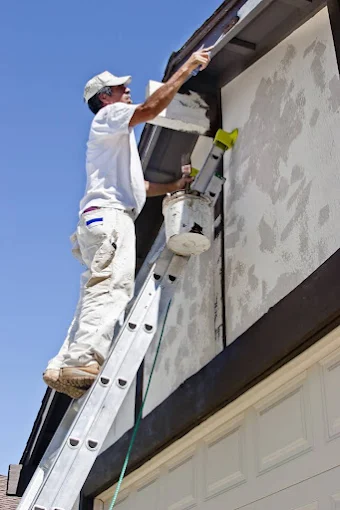
Ceiling work usually lands inside a larger budget, so it helps to know the cost of interior painting for the whole house before you price a single room. Ask for a walkthrough before anyone puts a number on your ceiling. Five minutes with a work light held sideways across the surface shows more than a measurement will.
Staring up at a ceiling that’s been painted over a few times and not sure what’s under it? Give us a call at (737) 234-7595, and we’ll come take a look before you commit to anything.
The Repair Stage Decides How the Ceiling Looks
Old texture hides a great deal, and the scrape is what exposes it. Loose tape, popped nails and screws, and seams that were never finished properly all come into view at once. Staining from an old roof leak tends to show up then too. All of it is drywall repair rather than painting, and on most ceilings it accounts for more labor than the removal did.
A thin skim coat of joint compound brings the whole surface into one plane before it gets sanded flat. Austin, Texas, humidity has a say in how long that cure takes, and compound rushed while still damp telegraphs through the finish coats.
We check the surface under angled light, because a flat ceiling has nowhere to hide a poorly floated seam. Stain-blocking primer then goes over the bare compound and any old water marks, which is what stops repairs from flashing through the color, and two finish coats follow, drawn from the lines we already work with.
When Leaving a Textured Ceiling Alone Makes More Sense
Removal is not automatically the right call, and we would rather say so before a project starts than halfway through one. Ceilings with real water damage often make more sense to replace than to scrape and patch.
Compounding over compromised drywall buys time rather than fixing anything. Two-story great rooms and stairwell ceilings add staging hours that can outrun what the change delivers in a room nobody lingers in.
Timing carries weight too. A homeowner listing in three weeks is usually better served by a clean repaint of the existing texture. Opening a repair project with an unknown behind it can swallow the schedule.
Anyone pairing this with new flooring should sequence the ceiling ahead of it, because sanding dust settles into everything below. The texture has waited forty years. It can wait for the right point in the schedule.
Not sure whether removal is worth it for your ceilings, or just want a straight read before you commit? Contact us, and we’ll walk the rooms with you. You can also call us at (737) 234-7595 or stop by our shop at 210 S Mustang Ave, Cedar Park, TX 78613. We’re here Monday to Friday, 8:00 AM to 8:00 PM, and we work across Cedar Park, Texas, and the surrounding metro.