
Brick and stucco homes deal with a different kind of weather stress than a wood sided house does, which is exactly why masonry paint gets formulated the way it does. Any trusted painting company will tell you that Austin’s mix of relentless sun, heavy UV exposure, and humidity swings puts real strain on exterior coatings, but the makeup of masonry paint gives it a few real strengths for holding up against our weather.
The Weather Conditions Doing the Damage
Austin summers bring long stretches of direct sun and high UV exposure, which breaks down paint pigment and binder over time regardless of what surface it is sitting on. That breakdown shows up as fading, chalking, or eventually cracking once the paint film has degraded enough. Add in the daily swing between very hot afternoons and cooler nights, and you get a constant cycle of expansion and contraction that stresses whatever coating is applied to the surface.
For masonry specifically, humidity plays an additional role. Brick and stucco are porous materials that absorb and release moisture naturally, and Austin’s humidity swings mean that moisture movement never really stops. A coating that cannot accommodate that movement is more likely to trap moisture underneath, which can lead to peeling, bubbling, or damage to the masonry itself over time.
Why Flexibility Matters More on Masonry
The core advantage of masonry paint in a climate like ours comes down to flexibility. Because these coatings are formulated to move with a porous surface rather than sit rigidly on top of it, they tend to handle the expansion and contraction cycle better than a standard paint product would if applied to brick or stucco.
That flexibility also helps with the moisture side of things. A masonry coating that allows some vapor to pass through, rather than sealing the surface completely, reduces the risk of trapped moisture building up behind the paint film. On a hot, humid summer day, that difference matters more than it might on a mild coastal climate where humidity swings are less dramatic.
What Proper Application Adds to Performance
Even the right product will underperform if it goes on incorrectly, and this is especially true for masonry surfaces in our climate. Application timing matters just as much as the product itself. Paint applied in direct sun or during high humidity can cure improperly, which shortens the life of the finish no matter how good the coating is on paper.
We schedule masonry and exterior work around weather windows rather than a fixed calendar date, watching temperature and humidity levels closely before starting any coating application. This is the same approach we take on every exterior painting project, but it carries extra weight on masonry surfaces where trapped moisture from improper curing can cause more than just a cosmetic problem.
The Role of Surface Prep
Performance in our climate starts well before the first coat goes on. Masonry surfaces need to be clean and free of efflorescence, old failing paint, or debris before a new coating can bond properly. Skipping this step is one of the most common reasons a masonry paint job fails early, regardless of how good the product itself is.
Cracks and gaps also need attention before painting, since these are entry points for moisture that no amount of coating can fully seal after the fact. We treat this prep phase as the foundation of the entire job, because a coating applied over a poorly prepped masonry surface is set up to fail no matter how well it performs on paper.
What Homeowners Should Expect Over Time
Even with the right product and proper application, masonry paint is not a one time, forever solution. Weathering happens gradually, and how quickly it shows up depends on sun exposure, the specific surface material, and how well the initial application was done. South and west facing walls in particular tend to see more sun exposure and may show wear before other sides of the home.
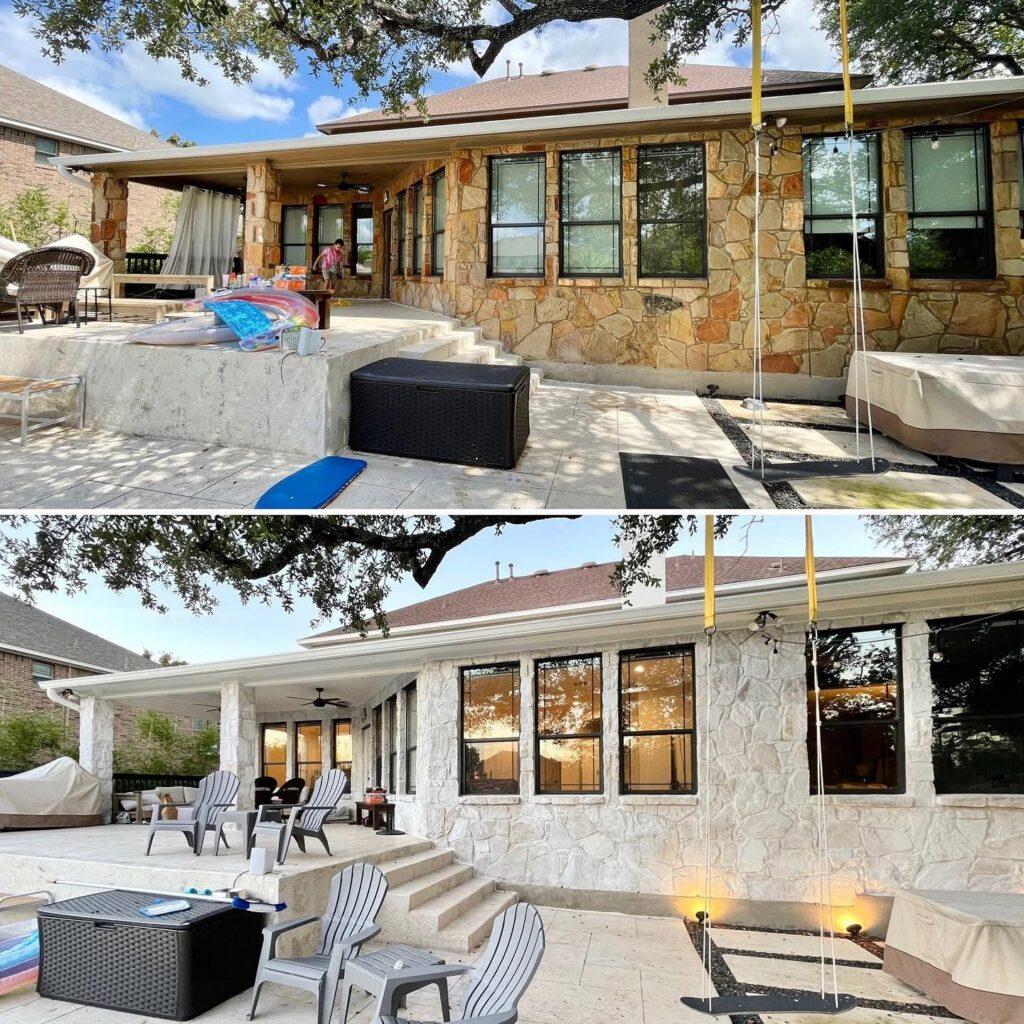
What homeowners should expect from a properly done masonry paint job is a finish that ages gracefully rather than failing suddenly, similar to what you would expect to see in terms of how long exterior paint lasts in Texas heat. Gradual, even fading over several years looks very different from early peeling or cracking, and the difference between those two outcomes almost always traces back to prep quality and application timing rather than the paint product alone.
Getting a Straight Answer for Your Home
Every masonry surface behaves a little differently depending on age, material, and how it has been maintained over the years. If you are noticing fading, cracking, or peeling on a brick or stucco exterior and wondering whether it is a weather issue or an application issue, an in person look tells us far more than a general answer ever could.
We walk the property, look closely at what is actually happening to the surface, and give you a straightforward explanation of what we are seeing and what it would take to fix it properly before any work begins. Every recommendation we make comes from what we actually observe on your home, not a generic assumption about how masonry paint should behave in our climate.
We also take the time to explain why we are recommending a particular approach rather than simply handing over a quote. If your home needs additional crack repair or efflorescence removal before painting can happen, we will walk you through why that step matters and how skipping it would shorten the life of the finish. Homeowners deserve to understand what they are paying for, and that starts with a clear conversation about the specific conditions affecting their brick or stucco exterior.