
A growing number of our Austin clients have started asking about masonry paint, often right after noticing a neighbor’s brick or stucco home get a fresh new look. As a custom painting company, we get why the question comes up so often once people spot the difference next door.
Masonry paint is not the same product you would use on wood siding or drywall, and knowing what sets it apart goes a long way toward explaining why it holds up so well on the kind of exterior surfaces you find throughout homes across Central Texas.
What Masonry Paint Actually Is
Masonry paint is formulated specifically for porous, mineral based surfaces like brick, stucco, and concrete block. Standard exterior paint is designed to sit on top of wood or fiber cement siding, but brick and stucco behave differently. These surfaces are porous, meaning they absorb and release moisture constantly, and they expand and contract with temperature swings in ways that smooth siding does not.
Masonry paint is built to flex and breathe along with that surface instead of forming a rigid film that can crack or trap moisture underneath. Some masonry coatings are mineral based themselves, which allows them to chemically bond with the substrate rather than simply sitting on the surface like a standard latex paint would.
Homeowners comparing brick coating options often weigh the pros and cons of limewashing a brick exterior for this same reason, since that bonding process is part of why masonry coatings tend to age differently, often fading more gracefully instead of peeling or flaking the way a mismatched paint product would over time.
Why Austin Homes Are a Good Fit for This
Central Texas exteriors face a specific combination of challenges that make paint selection matter more here than in milder climates. Intense summer sun breaks down pigment and binder in lower grade paints, leading to fading and chalking well before a paint job should need attention. On top of that, the daily swing between hot afternoons and cooler nights causes materials to expand and contract, which stresses whatever coating is sitting on the surface.
Brick and stucco homes in particular need a coating that can move with the material underneath rather than fighting against it. A rigid, non breathable paint on a porous masonry surface can actually trap moisture inside the wall system, which creates problems that go well beyond how the paint looks.
Masonry paint’s ability to allow some moisture movement while still protecting the surface is exactly the kind of performance that matters in our climate, which is part of why we get more questions about it every year.
How Masonry Paint Differs From Standard Exterior Paint
The biggest difference comes down to flexibility and breathability. Standard exterior paints, even high quality ones, are generally formulated with wood, fiber cement, or previously painted surfaces in mind. They are built to form a protective film on top of the material. Masonry paint is formulated to work with a more absorbent, more textured surface, and it often has a different sheen and texture as a result, sometimes appearing more matte or slightly textured compared to a standard painted wall.
Application also differs. Masonry surfaces typically need more thorough cleaning and sometimes a specific primer or conditioner before the finish coat goes on, since dust, efflorescence, or old coatings can interfere with how well the new product bonds.
This is not a corner we cut on any exterior project, but it becomes especially important on brick and stucco work where the prep step directly affects how long the finish lasts.
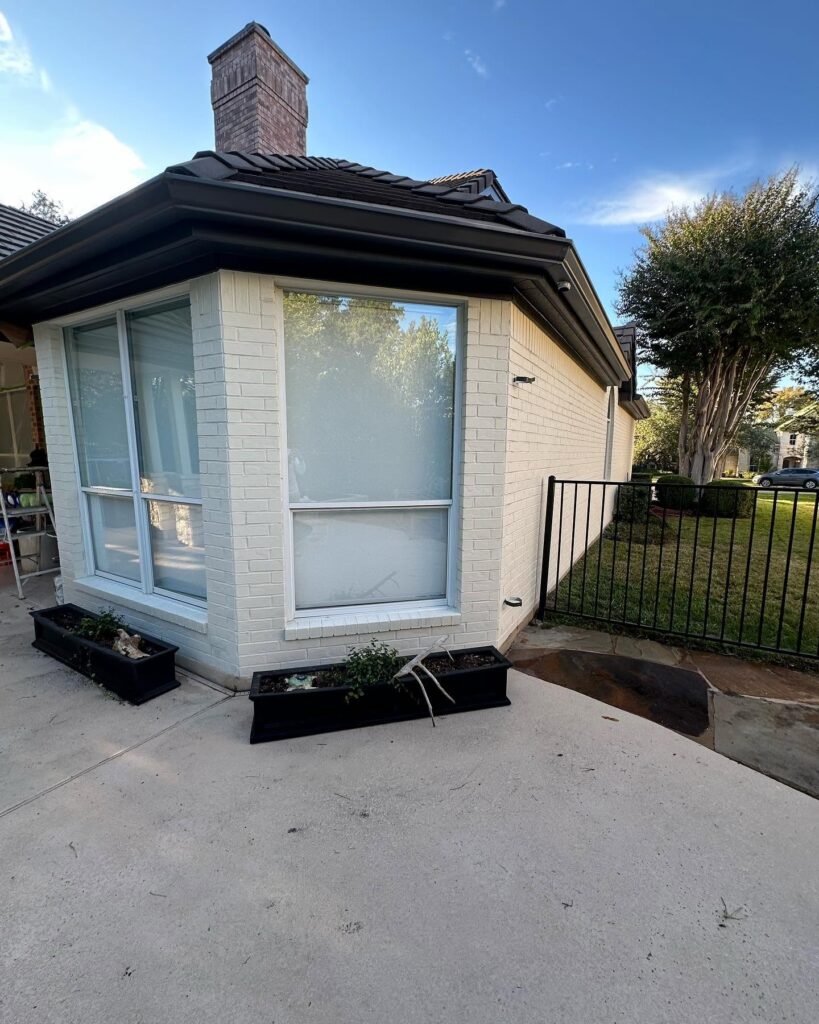
What This Means for Your Project
If you own a brick or stucco home in the Austin area and you are considering an exterior refresh, the conversation about paint should start with the surface itself, not just the color you have in mind. A home with heavily textured stucco, visible mortar joints, or areas of previous paint failure needs a different approach than a smooth fiber cement exterior would.
During a consultation, we walk the property, look at the existing surface condition, and talk through what coating makes sense given your specific home and how it has weathered so far. Sometimes that means a masonry specific product, and sometimes a standard exterior coating is still the right call depending on the material. We would rather have that conversation honestly upfront than apply the wrong product and watch it fail early.
Prep Work Still Comes First
No matter which paint or coating ends up being right for your home, prep work is what determines whether the final result holds up. For masonry surfaces specifically, that means checking for existing cracks, efflorescence, or areas where old paint is already failing, and addressing those issues before any new coating goes on.
We treat this step the same way on every exterior project, whether it is a wood sided home or a brick exterior. Sanding, cleaning, and priming take time, but skipping them is the single fastest way to end up repainting again in a few years instead of getting the full life out of the job. Our five year exterior warranty reflects the confidence we have in that process, and it applies regardless of which exterior surface type your home has.
Talking Through Your Options
Every home is a little different, and masonry surfaces add a layer of consideration that a straightforward wood or siding exterior does not require. If you are weighing whether masonry paint is right for your brick or stucco home, the best next step is an in person look at the surface rather than guessing from a product label.
We are happy to walk through what we are seeing on your specific exterior, explain the reasoning behind our recommendation, and give you a clear picture of what the process and timeline would look like before any work begins.