
A well prepped exterior repaint in Central Texas should hold for eight to twelve years. A cheap one starts failing at three to five. We have worked as an owner-operated residential painting company across the Austin metro since 2017. Our five year exterior warranty reflects what properly executed work delivers here. The gap between those two numbers is almost never the paint. It is prep, product grade, and the conditions on the day it went on.
A paint job that lasts a decade in a mild climate can look tired here in five or six years. That is not a defect. It is what our climate does to a coating.
Why Central Texas Is Hard on Exterior Paint
Three forces do most of the damage, and they work on different parts of the coating.
UV radiation breaks down pigment and binder over sustained exposure. Austin sits at a low latitude with more annual sun hours than most of the country, so the effect arrives faster here. Colour fades first. Then the binder degrades, which shows as chalking, and eventually the film loses integrity altogether. Premium exterior products use UV resistant formulations to slow that process, and the difference is visible by year four.
Temperature cycling stresses the bond rather than the surface. Summer afternoons run past 100 degrees, and winter brings occasional freezes. That annual swing makes siding, trim and masonry expand and contract underneath whatever is painted on them. Paint that was applied over a failing substrate, or without proper primer adhesion, cracks as the stress accumulates.
Spring humidity is the one homeowners underestimate. Central Texas springs are wetter than people expect, and warm damp air finds any gap that was not fully caulked. Once moisture gets behind the film, it shows up as blistering or peeling at window edges, trim joints, and anywhere two materials meet.
What You Should Actually Expect
Numbers vary by exposure, so treat these as ranges rather than promises.
| Scenario | Expected life | What fails first |
|---|---|---|
| Premium product, full prep | 8 to 12 years | South and west walls, trim |
| Mid grade product, full prep | 6 to 8 years | Colour fade on sun facing walls |
| Any product, rushed prep | 3 to 5 years | Peeling at caulk lines and perimeters |
South and west facing walls take the most sun, so they show wear before the rest of the house does. Trim goes early too, because it has more edges and more caulk. Repainting at year five after a cheap job means you bought two paint jobs where one should have done. That gap opens up before the first coat goes on, which is what preparing a home for exterior painting covers.
What Separates The Long Jobs From The Short Ones
Prep does more for longevity than product selection, and it is the part that gets cut when a bid comes in low.
Power washing removes the dirt and chalk that a new coat cannot bond through. Scraping and sanding take off anything already lifting, because paint applied over a failing layer fails with it. Caulking closes the gaps that spring humidity would otherwise exploit. Priming gives the topcoat something to hold. Skip any of those and the calendar shortens, no matter what is in the can.
Timing matters as much as technique. Paint applied in direct sun or high humidity cannot cure properly. A coating that never cured fully will not last as long as one that did. So the season you book in changes the result. We have written separately on the best time for exterior painting in Austin.
Wondering where your own house sits on that table? Ask us for a free consultation and we will walk the exterior and tell you honestly how much life is left in it.
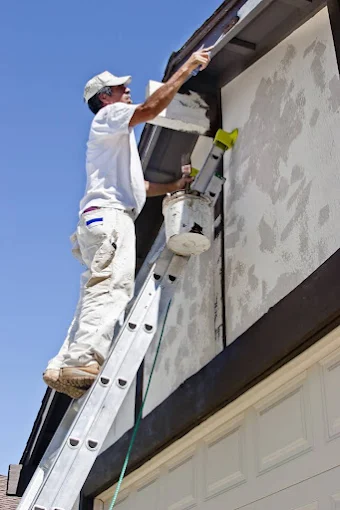
How To Get More Years Out Of What You Have
Three habits stretch an existing paint job, and none of them takes much.
- Inspect caulk lines once a year, at window perimeters, door frames and trim joints, and replace anything cracking or separating
- Touch up peeling spots immediately, because a small lifted area stays small and a neglected one spreads
- Clean mildew when it appears, particularly on shaded north facing walls after a wet spring
- Rinse the south and west elevations occasionally, since chalk and grime accelerate visible fade
- Watch the trim, which almost always signals trouble before the body walls do
Caulk is the highest return item on that list. It is a small maintenance task that keeps moisture out of the wall, and it buys years rather than months.
What We Do Differently On Exterior Work
Every project starts with a walk of the property before anyone quotes. We look for existing damage, failing caulk, and substrate problems that need fixing before paint goes anywhere near them.
Our exterior painting process runs power washing, scraping, sanding, caulking and priming before the finish coats. We schedule around temperature and humidity rather than around convenience. Product gets matched to the surface, drawing on Benjamin Moore and Sherwin-Williams lines rather than defaulting to one house brand. Masonry is its own conversation, since mineral based finishes behave differently on brick and stucco than acrylic does.
Prep is where the years come from, so nothing gets a finish coat until the surface underneath is sound.
The Honest Summary
Eight to twelve years is achievable in Austin, TX with good prep and a premium product. Three to five is what happens when either one gets skipped. The paint aisle is not where that decision gets made.
Planning an exterior repaint anywhere around Austin, TX? Book a free consultation and we will give you a realistic timeline for your specific elevations rather than a generic number.
Common Questions
How long should exterior paint last on an Austin home?
With thorough prep and a premium exterior product, expect eight to twelve years before a full repaint. South and west facing walls see more UV and often show wear earlier. Lower grade products or rushed prep typically produce visible failure at three to five years.
Which exterior paint holds up best in Texas heat?
Premium full acrylic exterior lines from established manufacturers perform best on conventional siding and trim. They offer stronger UV resistance and more flexibility through temperature swings. For brick and stucco, mineral based finishes are worth discussing, since they behave differently on masonry than acrylic does.
What causes exterior paint to peel here?
Peeling usually traces back to prep rather than product. The common causes are thin surface preparation, moisture entering through failed caulk, and paint applied in conditions that prevented proper curing. Premium products over properly prepped surfaces rarely peel within their warranted life.
How often should I repaint the exterior?
A quality job should go eight to twelve years. Annual caulk inspection and prompt attention to small peeling spots can extend that. Homes painted with lower grade products or thin prep may need repainting in four to six years. That is the more expensive path over time.