
Limewash keeps coming up in conversations with clients lately, and as an interior painting company that also handles exterior projects, we’ve noticed just how often the requests roll in. People usually mention spotting it on a brick exterior or a stucco accent wall somewhere, then ask how they can bring that same soft, weathered charm to their own home.
Unlike standard paint, limewash is made from a completely different base, and the finish it leaves behind has a character all its own. Once you see what sets it apart, it makes sense why so many homeowners around Austin have taken such a liking to it.
What Limewash Actually Is
Limewash is a mineral based finish made from slaked lime rather than the acrylic or latex resins found in standard paint. Because it is mineral based, it interacts with a surface differently than conventional paint does. Instead of forming a solid, uniform film on top of the material, limewash actually bonds with porous surfaces like brick, stucco, and plaster, becoming part of the wall itself rather than simply sitting on it.
That bonding process is part of what gives limewash its signature look. Rather than a flat, even coat of color, limewash creates natural variation and texture, with subtle shifts in tone that make a wall feel handcrafted rather than machine finished. No two limewash walls look exactly alike, and that variation is part of the appeal rather than something to correct.
Why Homeowners Are Choosing It Right Now
A lot of the interest we see comes from homeowners wanting something that feels less uniform and more organic than a standard painted wall. Limewash gives a brick exterior or an accent wall a soft, matte, almost weathered quality that looks intentional rather than dated, which is part of why it works so well on both older homes and newer builds trying to add character.
It also shows up often on interior accent walls, where homeowners want texture and depth without going as far as wallpaper or a heavily textured plaster finish. A limewashed wall catches light differently throughout the day, and that subtle movement is something a flat painted wall simply cannot replicate.
How Limewash Differs From Standard Paint
The biggest difference is the bond itself. Standard paint sits on top of a surface as a film. Limewash chemically bonds with mineral surfaces like brick, stucco, and plaster, which is why it tends to hold up well on those specific materials but is not typically recommended for smooth drywall or wood surfaces the way standard interior paint would be.
Texture is the other major difference. Limewash naturally creates soft variation across a wall rather than the flat, uniform coverage you get from standard paint. Some homeowners want that texture emphasized further with specific application techniques, while others prefer a more subtle, even application. Either way, the finish reads as intentional rather than uneven, which is part of what makes it feel premium compared to a standard paint job.
Where Limewash Works Best
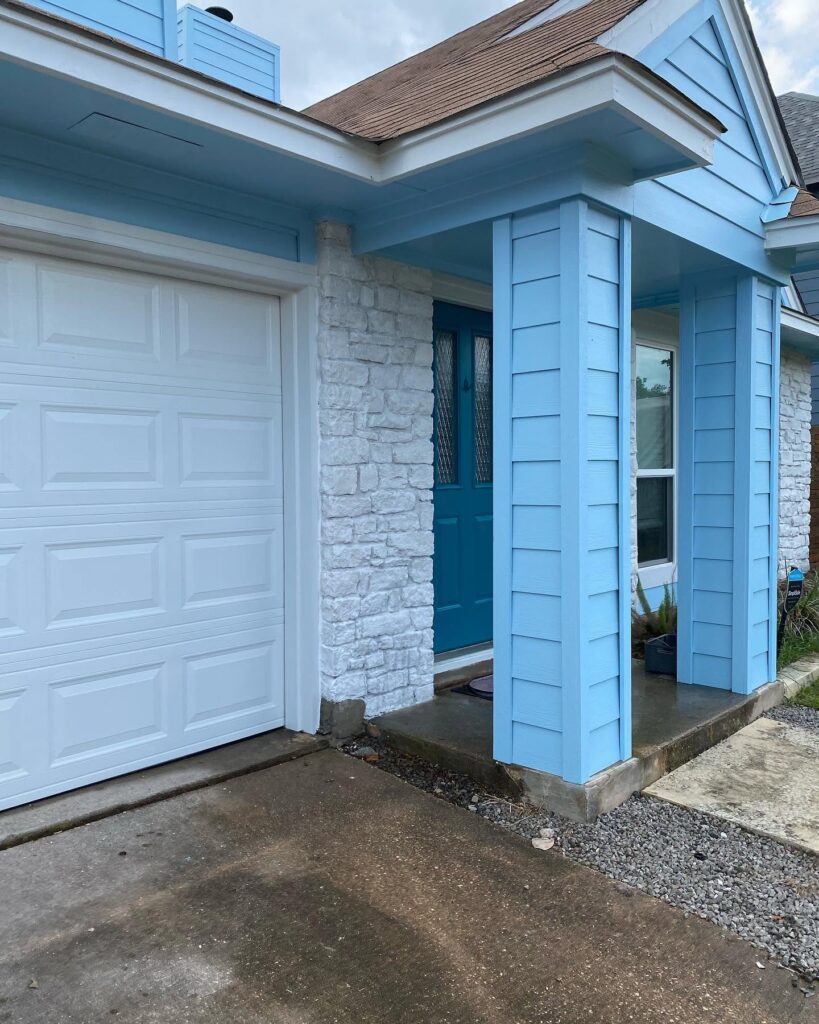
Limewash performs best on porous, mineral based surfaces. Brick exteriors are one of the most common applications we see, a look we’ve broken down in more detail when weighing the pros and cons of limewashing a brick exterior, since the natural texture of brick pairs well with limewash’s organic finish.
Stucco exteriors are another strong fit for similar reasons. Interior applications on plaster or masonry accent walls also work well, giving a room a textured focal point without a full remodel.
Surfaces that are already painted, sealed, or non porous are a harder fit for limewash, since the product needs to be able to bond with the material underneath rather than sit on top of an existing coating.
Part of our consultation process for any limewash project involves looking at the specific surface to confirm it is a good candidate before moving forward.
What the Process Involves
Getting a limewash finish right starts with prep work just like any other paint project, though the specifics look a little different. The surface needs to be clean and free of dust, previous coatings, or contaminants that would interfere with the bonding process. Depending on the surface and its condition, some additional preparation may be needed before the limewash itself goes on.
Application technique matters more with limewash than with standard paint, since the finish depends on how the product is worked into the surface rather than simply rolled on evenly. This is part of why we treat limewash as a specialty finish rather than a standard paint job, and why getting it right takes an experienced hand rather than a rushed application.
Talking Through Whether Limewash Is Right for Your Home
Limewash is not the right choice for every surface or every homeowner’s taste, and that is worth being upfront about. If you are drawn to the soft, textured look but are not sure whether your brick, stucco, or interior wall is a good candidate, an in person consultation is the best way to find out.
That’s exactly how we approach every limewash painting project. We walk through the surface with you, explain what the finished result would look like on your specific home, and talk through timeline and next steps before any work begins, so you have a clear picture of what to expect from start to finish.